

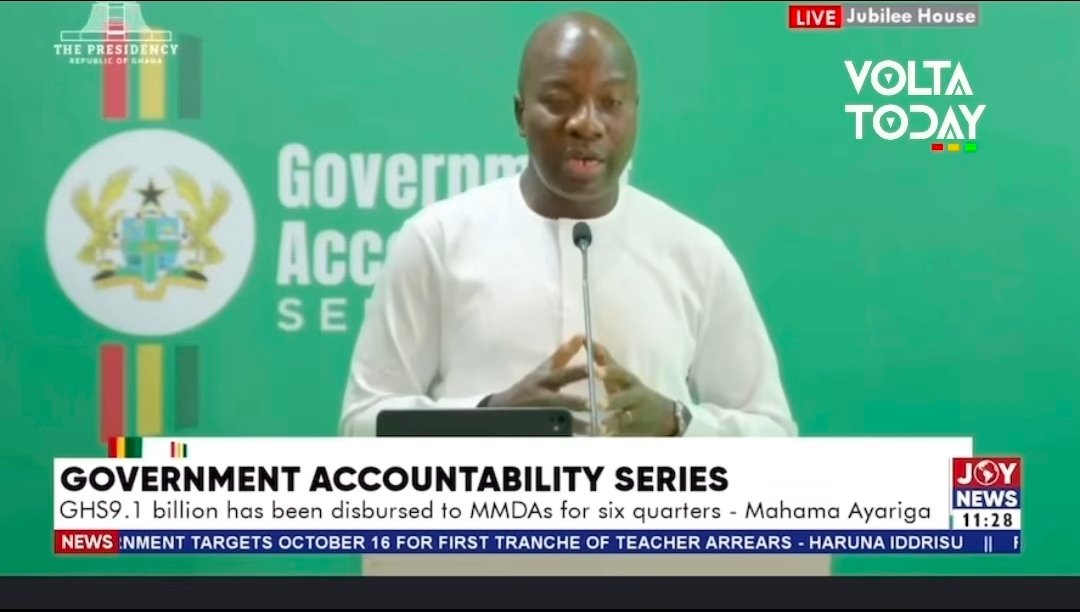
The Minister for Local Government, Chieftaincy and Religious Affairs, Hon. Mahama Ayariga, has highlighted a significant shift in central government support for local governance, citing a drastic increase in financial allocations to the Ketu South Municipal Assembly to Ghc18m as comparedto Ghc1.2m receivedin the entire 2024. According to recent sector figures, the assembly was allocated Gh¢18 million within just three quarters under the National Democratic Congress (NDC) administration, compared to approximately Gh¢1.2 million received for the entire year of 2024. This substantial capital injection represents a major turning point for local development in the municipality.
The primary purpose of these funds, primarily distributed through the District Assemblies Common Fund (DACF) alongside statutory transfers, is to decentralize development and give local authorities the financial backing needed to address core infrastructure gaps. For a rapidly growing border area like Ketu South, increased financial liquidity ensures that long-overdue public works ranging from road rehabilitation and feeder road connections to improved municipal sanitation networks can finally move from planning stages to active execution.
A significant portion of municipal disbursements is directed toward social infrastructure, particularly health and education. The funds enable the assembly to construct and equip basic school classrooms, upgrade Community-Based Health Planning and Services (CHPS) compounds, and provide essential utilities to underserved rural communities across the municipality. By expanding these facilities, local governance aims to reduce overcrowding in public schools and bring basic healthcare closer to residents.
Beyond infrastructure and social facilities, local assembly disbursements power grassroots economic empowerment programs. Funds are regularly earmarked to support local small and medium enterprises (SMEs), vocational training for youth, and statutory allocations for Persons with Disabilities (PWDs) within the municipality. Additionally, a fraction of these resources covers municipal operational costs, disaster management interventions, and security monitoring across critical border zones.
Click to watch video
https://www.facebook.com/share/v/19pe7v2JkC/
With higher funding allocations comes an increased demand for transparency, oversight, and effective management from local residents and civic groups. To ensure that every cedi generates maximum value for the community, local authorities are expected to strictly align expenditures with approved municipal medium-term development plans, publish project progress reports, and engage in regular town hall consultations with stakeholders.
Click to watch video
https://www.facebook.com/share/v/19pe7v2JkC/
@Volta Today


Comments
No comments yet. Be the first to share your thoughts!
Leave a Comment