

Esther Afua Ocloo’s name is written in gold in the story of Ghana’s economic and social development. Born on April 18, 1919, in Peki Dzake in the Volta Region, she rose from humble beginnings to become one of Africa’s most influential business leaders and advocates for women’s empowerment. Her journey is not just inspiring,it is a powerful lesson in resilience, innovation, and the transformative power of opportunity.
Real Profile of Esther Afua Ocloo
Esther Afua Ocloo (18 April 1919 – 8 February 2002) was a trailblazing Ghanaian businesswoman, food industry pioneer, and champion of women’s economic empowerment. Born in Peki-Dzake, Volta Region, she broke barriers in business and finance, leaving a legacy that continues to inspire generations.
Ocloo won a scholarship to Achimota School, graduating with a Cambridge School Certificate. Her early education and entrepreneurial spirit laid the foundation for her groundbreaking work in Ghana’s food industry.
In 1943, with a small gift from her aunt and skills from Achimota, she began selling marmalade in Accra. She later secured contracts to supply Achimota School and the Royal West African Frontier Force with orange juice. To fulfill these orders, she founded Nkulenu Industries, the first food processing factory in the Gold Coast, financed partly through a bank loan.
Encouraged to refine her skills, she studied food preservation in England and returned to Ghana determined to promote locally made goods. She organized the first “Made-in-Ghana” exhibition (1958) and, with President Kwame Nkrumah’s support, became the first President of the Federation of Ghana Industries.
From the 1970s, Ocloo focused on women’s economic empowerment, championing micro-credit to help women start businesses. She served on multiple national and international boards, including as:
Adviser to the Council of Women and Development (1976–1986)
Member of Ghana’s National
Economic Advisory Committee (1978–1979)
Member of the Council of State (Third Republic, 1979–1981)
Founding Chairperson of Women’s World Banking, a global microfinance network.
Her work earned her the 1990 African Prize for Leadership and numerous other awards recognizing her commitment to women and family empowerment.
Esther Afua Ocloo remains a symbol of Ghanaian entrepreneurship, innovation, and the transformative power of micro-credit.
Growing up in a modest household, Esther faced financial challenges that could have limited her future. However, she refused to let her circumstances define her destiny. With determination and courage, she began learning how to preserve food at a young age, a skill that would later become the foundation of her entrepreneurial journey.
Her breakthrough came when she started producing and selling marmalade and fruit juices using local ingredients. At a time when imported goods dominated the market, Esther dared to believe in the value of locally made products. This bold vision led her to establish Nkulenu Industries, one of Ghana’s first indigenous food processing companies. Through this venture, she proved that African businesses could thrive using local resources and talent.
Esther Afua Ocloo was not just a businesswoman; she was a visionary. She understood that economic independence was key to improving the lives of women. At a time when many women had limited access to formal employment or financial services, she championed the idea that women could build sustainable businesses if given the right support.
This belief led her to become one of the founding figures behind the Women’s World Banking (WWB) network, a global organization dedicated to providing financial services to low-income women entrepreneurs. Alongside global leaders like Michaela Walsh, Esther helped to create pathways for women to access credit, training, and financial tools that were previously out of reach.
Her advocacy for micro-credit was revolutionary. Before the concept became widely accepted, Esther was already promoting small loans as a way to empower women economically. She believed that even the smallest amount of capital could transform a woman’s life, enabling her to start a business, support her family, and contribute to her community.
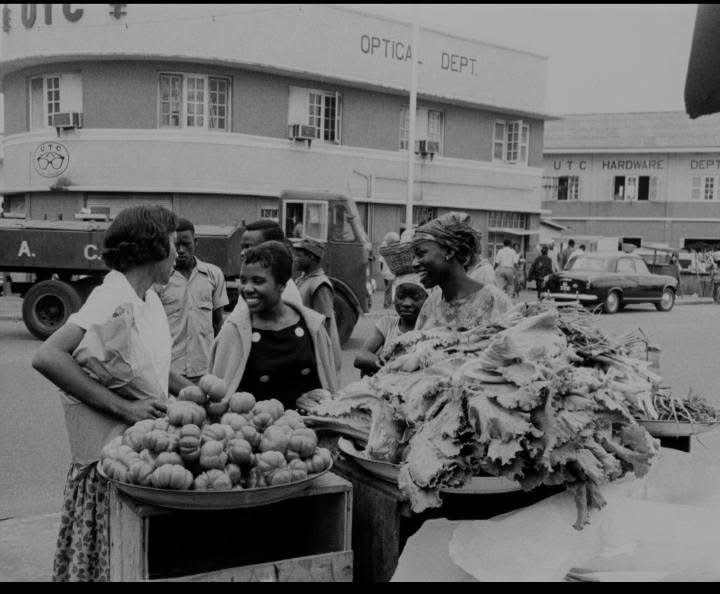
In Ghana, her impact was deeply felt among market women, especially in places like Makola Market in Accra. These women, often overlooked by traditional banking systems, found hope in the idea that they too could access financial support. Esther’s work helped shift the narrative, proving that women in informal sectors were not just survivors ,they were entrepreneurs.
Education and training were also central to her mission. Esther was passionate about equipping women with practical skills in food processing, business management, and financial literacy. She believed that empowerment was not just about giving money but also about building confidence and knowledge.
Her contributions earned her numerous awards and recognition both locally and internationally. She received honorary degrees and was celebrated as a trailblazer who broke barriers for African women in business. Yet, despite her achievements, she remained deeply committed to serving others.
Esther Afua Ocloo also played a key role in shaping policies that supported small and medium enterprises in Ghana. Her voice was instrumental in advocating for local industries and encouraging governments to invest in women-led businesses.
Beyond her professional achievements, Esther’s legacy is deeply human. She believed in dignity, hard work, and the power of community. She often emphasized that true success is measured not just by personal gain but by how many lives you uplift along the way.
Today, her influence can still be seen in the growing number of women entrepreneurs across Ghana and Africa. From small-scale traders to large business owners, many are walking the path she helped to create. Her life reminds us that empowerment begins with opportunity and that one determined individual can spark a movement that changes the world.
Esther Afua Ocloo passed away on February 8, 2002, but her legacy continues to inspire generations. Her story is a beacon of hope, especially for young women who dare to dream beyond limitations.
As we celebrate her life, we are reminded of a simple but powerful truth: when you empower a woman, you empower a nation. Esther Afua Ocloo did exactly that and her impact will never be forgotten.
Credit: The Heritage Chronicle




Comments
No comments yet. Be the first to share your thoughts!
Leave a Comment