

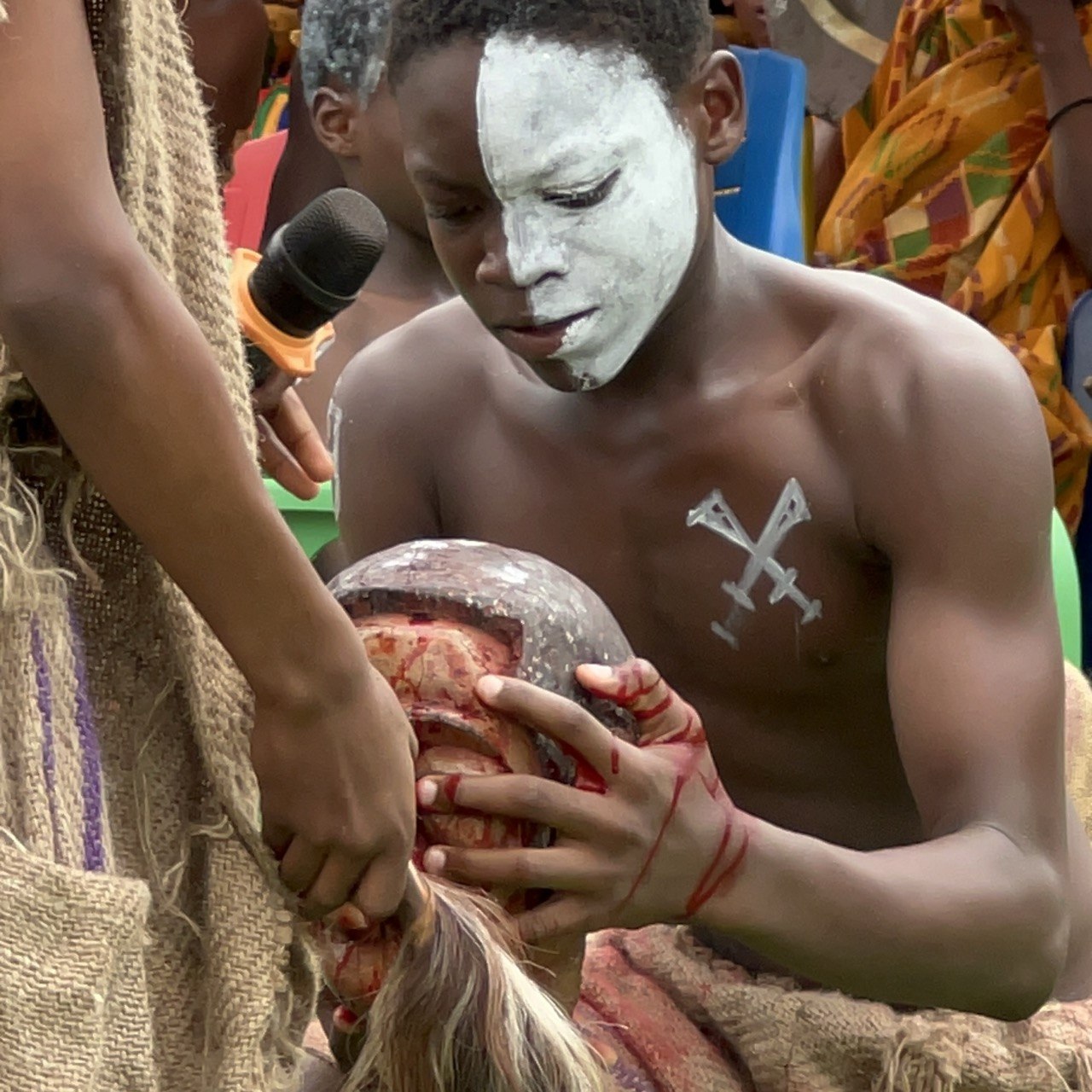
TOP 20 POPULAR DEITIES IN THE VOLTA REGION (EWE TRADITIONAL RELIGION)
Ewe traditional religion in Ghana's Volta Region centers on a supreme creator, Mawu (or Mawuga Kitikata), and numerous, highly revered lesser deities (trowo) that govern daily life, nature, and justice, often worshipped through shrines and initiations. Popular deities include thunder, water, and protection spirits, with the
1. Nogokpo shrine: being particularly renowned as most Popular Deities for justice and handling cases involving disputes.
2. Afa: The astral deity of divination and destiny; younger brother to Yewe.
3. Mami Wata / Poro Mami: A highly revered, widespread water spirit representing wealth and beauty.
4. Nana: A deity associated with ancestral worship and traditional authority.
5. Eda: A deity often worshipped in the coastal and Anlo-Ewe regions.
6. Sogbo-Lisa: A combined deity representing masculine (thunder) and feminine (sun) energies.
7. Kitikata: Referred to as the supreme sustainer of creation and cosmic order.
8. Adanuwotor: Appellation for the deity as the "owner of all knowledge".
9. Se: A deity responsible for individual fate or destiny.
10. Apetorku (Shrine Deity): Renowned for justice and spiritual protection in the Volta region.
11. Togbi Nogokpo (Shrine Deity): Powerful shrine often invoked for swift justice.
12. Afagame: A deity sometimes associated with particular family lineages.
13. Nyigbla: A war deity and guardian of the Anlo-Ewe people.
14. Klekpa: A deity linked with hunting and forest protection.
15. Kwakume: Often associated with specific, traditional religious families.
16. Tegare: A protective deity used for spiritual defense.
17. Wuti: A deity associated with local protection in southern Volta.
18. Baa: Another deity within the water spirit pantheon.
19. Adzovia: A deity linked with specific ancestral clans (Adzovia clan).
20. Lafe: A deity connected with animal totems (e.g., monitor lizard) and the Lafe clan.
Key Aspects of Worship Forms:
Primarily done through divination (Afa), possession, drumming, and sacrificial ceremonies.
· The Supreme Being: Mawuga Kitikata is considered all-powerful and omnipresent, worshipped through these lower trowo rather than through direct shrines.
· Symbolism: Ewe religion extensively uses symbols, and deities are rarely depicted in human form.

Comments
No comments yet. Be the first to share your thoughts!
Leave a Comment