

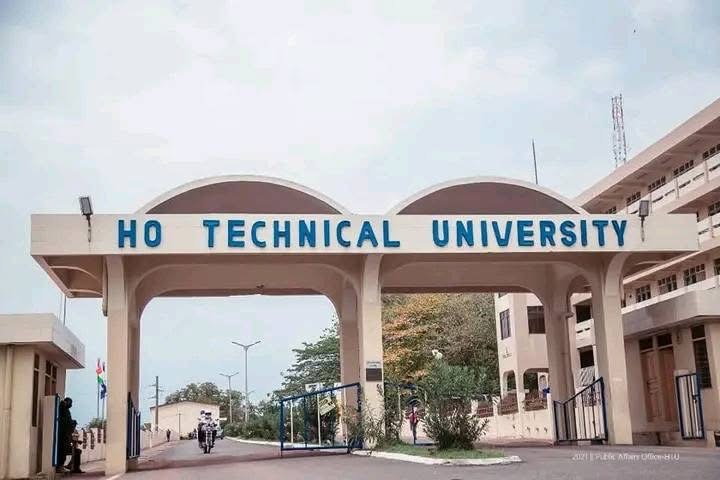
HO TECHNICAL UNIVERSITY: THE PRIDE OF VOLTA AND A POWERHOUSE OF PRACTICAL EDUCATION IN GHANA
When discussing institutions that are shaping the future of Ghana through practical education, innovation and skills development, one name stands tall in the Volta Region – Ho Technical University.
Ho Technical University (HTU) is a public technical university in Ho, the capital of Ghana's Volta Region, dedicated to competency-based education, research, and innovation in technical and vocational fields.[1] Originally established in 1968 as a Technical Institute offering pre-technical programs, it evolved into a polytechnic in 1986 and gained tertiary status in 1993 under PNDC Law 321, enabling Higher National Diploma (HND) training in areas such as engineering, agriculture, and business. In 2007, via the Polytechnics Act 745, it received authority to award bachelor's degrees; in 2016, under the Technical Universities Act 2016 (Act 922) as amended in 2018, it was upgraded to university status. By recent developments, it has expanded to master's programs in disciplines like Agricultural Engineering and Mechanical Engineering, operating as a secular, non-partisan institution from non-tertiary to postgraduate levels.
The university's academic structure encompasses seven faculties and schools, including the Faculty of Engineering, Faculty of Applied Sciences and Technology, HTU Business School, Faculty of Built and Natural Environment, Faculty of Applied Social Sciences, Faculty of Art and Design, and the School of Graduate Studies, alongside the Institute of Distance Learning for flexible education options. Programs range from two-year diplomas and HNDs to bachelor's and master's degrees, emphasizing practical skills in engineering, business management, applied sciences, and vocational trades, with additional short courses and non-tertiary offerings to support workforce development.
HTU promotes merit-based admissions and awards, upholding principles of gender equality, inclusivity across ethnicities, religions, and disabilities, and environmental stewardship in its governance and operations.
Beyond teaching, HTU fosters research, entrepreneurship, and international collaboration, partnering with institutions like the Central University of Technology in South Africa, Hamm-Lippstadt University of Applied Sciences in Germany, and the University of Lomé in Togo for exchanges, joint programs, and technology transfer initiatives. It supports scholarly activities through resources such as the African Journal of Technical Education and Management (AJTEM), postdoctoral research opportunities, and an Open Educational Resources platform, while providing student services including health, housing, and a Learning Management System to enhance the educational experience. A s a key contributor to Ghana's technical education landscape, HTU aims to produce highly competent graduates equipped for national development and global challenges.
Ho Technical University traces its origins to 1968, when it was established as a Technical Institute in Ho, Volta Region, Ghana, with the primary objective of providing pre-technical education to equip students with foundational skills in technical and vocational fields.
This initiative was part of Ghana's broader post-independence efforts to develop technical manpower for national development, focusing on practical training rather than advanced academic pursuits.
In its formative years, the institute operated modestly, offering certificate-level programs that emphasized hands-on learning in areas such as basic engineering and vocational trades. By 1972, it had made significant strides, upgrading and expanding its curriculum to include more specialized courses in engineering and vocational disciplines, such as agricultural and mechanical engineering, building technology, fashion design, hospitality management, and business education.
These developments reflected growing enrollment and the institute's evolving role in addressing the skilled labor needs of the region and country during the early 1970s economic challenges.
The early period was marked by infrastructural growth and adaptation to educational demands, laying the groundwork for future expansions while maintaining a commitment to accessible, practical education for local youth. Despite limited resources, the institute's focus on quality pre-technical training earned it recognition as a key contributor to Ghana's technical education landscape by the mid-1970s.
In 1986, the institution formerly known as the Ho Technical Institute was upgraded to the status of a polytechnic, marking a significant expansion in its academic offerings. However, it initially continued to function primarily as a second-cycle institution until 1993, when it was formally elevated to a full tertiary institution through the enactment of PNDC Law 321. This legislative change empowered the polytechnic to deliver training in technical and vocational skills up to the Higher National Diploma (HND) level, aligning it with Ghana's broader educational reforms aimed at enhancing technical education.
A further milestone occurred in 2007 with the passage of the Polytechnics Act 745, which granted polytechnics across Ghana, including Ho Polytechnic, the authority to award their own degrees up to the highest levels. This upgrade broadened the institution's scope beyond HND programs, enabling it to offer bachelor's degrees and fostering greater alignment with national development needs in technical fields. The Act represented a pivotal step in professionalizing polytechnic education and preparing the ground for more advanced academic pursuits.
The evolution to full university status was realized in 2016 through the Technical Universities Act 2016 (Act 922), which officially transformed Ho Polytechnic into Ho Technical University. This Act, subsequently amended by Act 974 in 2018, provided a comprehensive mandate for the university to award degrees, diplomas, certificates, and other qualifications up to the highest levels in disciplines such as engineering, science and technology, technical and vocational education and training, applied arts, and related fields. The upgrade was part of a national initiative to convert select polytechnics into technical universities, enhancing their role in research, innovation, and industry partnerships while addressing Ghana's demand for skilled professionals in STEM and vocational areas.
Since Ho Polytechnic was established in 1986 and later became Ho Technical University in 2016, its heads of institution have held different titles over the years, including Principal, Rector, Interim Vice-Chancellor, and Vice-Chancellor. Based on available institutional records, the leadership history is as follows:
James Yao Vodzi - 1980-1986 (Leader)
Principal (oversaw the transition from Technical Institute to Polytechnic)
George Mawusi Afeti - 2993–2006 (Rector)
Komla Agbeko Dzisi -2006–2010 (Rector)
Victor Kofi Afun Jakpasu -2010–2014 (Rector)
Emmanuel Kojo Sakyi - 2014 -2018 (Rector / Interim Vice-Chancellor during the transition to Technical University status.
Ben Quarshie Honyenuga- 2018–Present -Vice-Chancellor (confirmed substantive VC in 2019).
It is worth noting that before becoming a Technical University, the institution's chief executives were officially known as Rectors (and earlier, Principals), while the title Vice-Chancellor came into use after the conversion to a Technical University.
Few Prominent personalities that have completed Ho Polytechnic/Technical University since its establishment includes:
Kamal Ishola Yusuf :One of the most distinguished international alumni of Ho Technical University. He rose through the ranks of the Nigerian Armed Forces to become a Major-General and Chief of Defence Accounts and Budget. HTU recognized him as its first alumnus to attain the rank of Major-General.
Kwadwo Sheldon:One of Ghana's most influential digital media personalities. The Ghanaian YouTuber and social media commentator is listed among the notable alumni of Ho Technical University.
Simon Mesa Avorgah:A prominent alumnus who has played a significant role in alumni affairs and institutional development through the HTU Alumni Association.
Ho Technical University
Dr. Cederic Dorkenoo:An alumnus who has attained a senior leadership role in higher education administration at the University of Health and Allied Sciences.
Rev. Bright Adonai:A successful entrepreneur and business executive whose achievements have brought visibility to HTU's alumni community.
Hubert Yevu-Agbi:An alumnus who has served in a significant administrative role within Ghana's tertiary education sector.
Priscilla Art-Maduguh:A successful fashion entrepreneur and creative industry leader who served as a guest speaker at HTU's 26th Congregation.
Juliet Nugble:An active alumna known for leadership within the university's alumni structures and community engagement initiatives.
Francis Ganyaglo:A notable graduate recognized for his role in strengthening alumni relations and institutional advancement.
Akpeloo Grandwill:A prominent alumnus who has contributed significantly to alumni and student affairs within the institution.
Academic Programmes Offered
The university offers programmes across several disciplines, including:
🔹 Engineering
🔹 Computer Science and Information Technology
🔹 Agricultural Engineering
🔹 Hospitality Management
🔹 Tourism and Event Management
🔹 Food Technology
🔹 Statistics and Finance
🔹 Building Technology
🔹 Fashion Design and Textiles
🔹 Business Studies
🔹 Marketing
🔹 Purchasing and Supply
🔹 Accountancy
It also offers Higher National Diploma (HND), Bachelor's and selected Master's programmes.
Located in the ‘Oxygen City’ of the Volta Region, Ho Technical University provides a serene and aesthetic environment conducive for studies and practical research. The campus is wrapped with fresh, pure and toxin free air essential for optimum physical, social and intellectual development. HTU commits to protecting and maintaining a green environment by adhering to best environmental practices.
Being free from the bustle of the central part of Ho, the town gives serenity that makes for a congenial learning atmosphere. The campus is within five (5) minutes drive to most part of the town and strategically positioned for easy access to the several leisure and tourist sites in the region.
In addition to relevant career-centric libraries enriching learning and research culture, laboratories and workshops are well equipped with ultra-modern state of the art equipment and facilities for effective and practical experience. Our lecture halls and other facilities are disability friendly, structured to meet the needs of all students.
The University Clinic is resourced with caring and qualified healthcare professionals, who provide maximum healthcare needs of students, staff and the general public.
Student life at HTU offers “tons” of activities and networking opportunities enabling student engagement, reinvention and rediscovery in both their chosen fields of study and to explore areas of talents and interest.
As part of its effort in enhancing educational experience of students, HTU provides housing options that foster opportunities for building friendships and creating opportunities for teamwork. There are three principal Halls of Residence” and an ultra-modern Hostel which imbibes excellent human relations and residential life among students. In addition to the Campus football pitch, the halls have multi-purpose courts for sports such as volleyball and basketball. There are also standard sports facilities for student athletes to develop their athletic skills.
As Ghana pushes towards industrialization and technological advancement, institutions like Ho Technical University have become increasingly important.
The university is helping bridge the gap between education and industry by producing highly skilled graduates who are ready to contribute immediately after graduation.
Today, Ho Technical University stands as a symbol of educational excellence and regional pride.
It has become a major driver of economic activity in Ho and continues to attract students from every region of Ghana and beyond.
For many young people, gaining admission into Ho Technical University is the beginning of a journey toward innovation, leadership, and success.
The Heritage Chronicle Africa for more authentic African heritage stories.




Comments
No comments yet. Be the first to share your thoughts!
Leave a Comment