

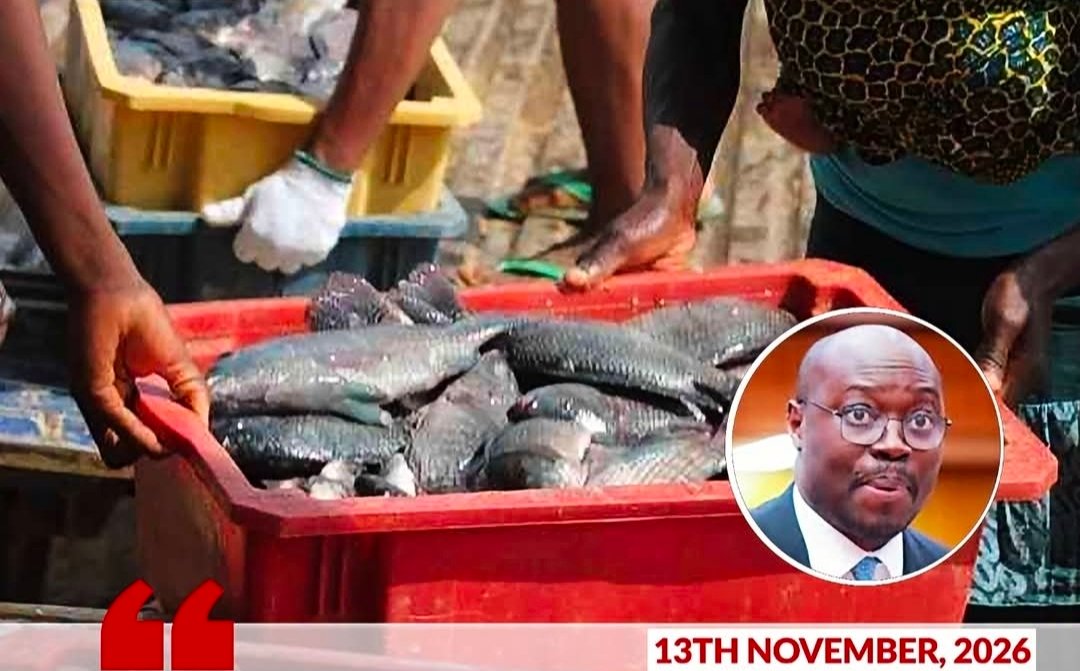
Finance Minister Cassiel Ato Forson has raised fresh concerns over Ghana’s heavy reliance on food imports, revealing that the country spends approximately $3.5 billion annually bringing food into the local market. Among these imports are 500 metric tonnes of fish, a figure that underscores how dependent the nation remains on foreign supply chains to meet basic nutritional needs. Despite this massive capital outflow, local markets continue to experience severe shortages, raising urgent questions about the efficiency of current agricultural and trade policies.
The core challenge highlighted by the Minister lies in the persistent supply deficits within two of Ghana’s most vital protein sectors: fish and poultry. Even with hundreds of metric tonnes of imported fish supplemented by domestic catches, demand continues to outstrip supply across households and commercial eateries. Similarly, the local poultry industry remains struggling under the weight of high feed costs, limited processing infrastructure, and stiff competition from cheaper frozen imports, leaving a wide gap between national consumption needs and local production capacity.
This imbalance poses both an economic and food security risk for the country. Spending $3.5 billion on food imports puts sustained pressure on the Ghana cedi and drains foreign exchange reserves that could otherwise be channeled into domestic infrastructure, healthcare, or industrial growth. Furthermore, relying heavily on external markets leaves Ghanaian consumers vulnerable to global supply chain disruptions, international price shocks, and currency fluctuations, all of which directly drive up local food inflation.
Addressing these unresolved gaps requires targeted investment in domestic aquaculture, sustainable marine fishing, and local poultry value chains. Economists and industry stakeholders emphasize that bridging the deficit will depend on improving access to affordable financing for local farmers, subsidizing poultry feed production, and modernizing storage and processing facilities. Without deliberate structural reforms to boost local output, Ghana risks remaining trapped in a costly cycle of high import bills and chronic protein shortages.
@Volta Today


Comments
No comments yet. Be the first to share your thoughts!
Leave a Comment