

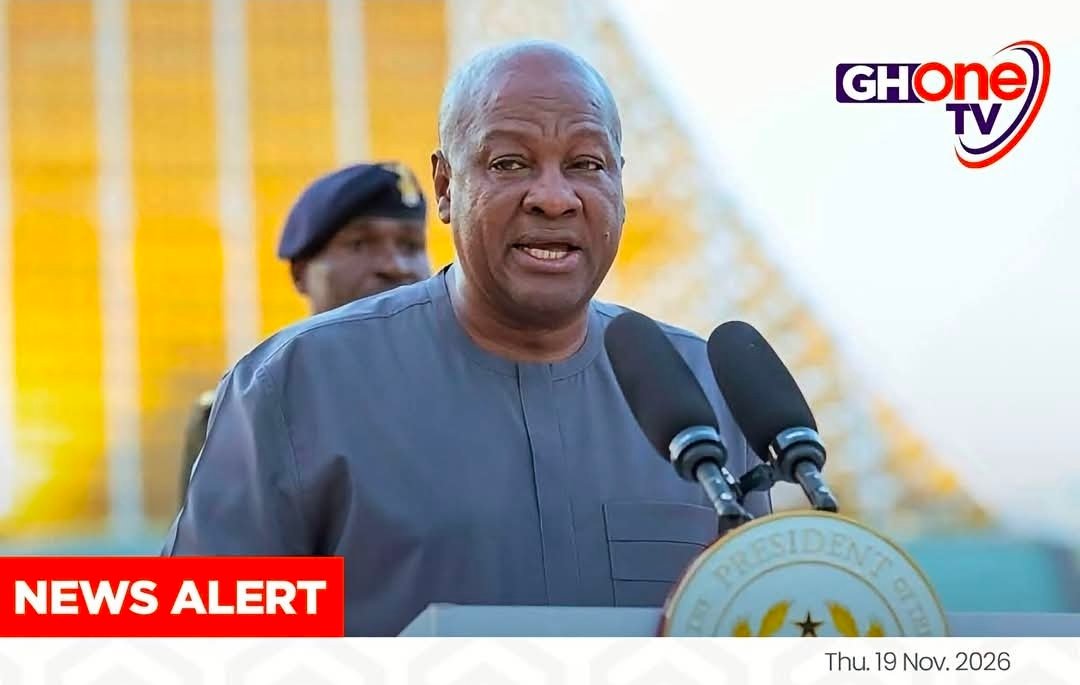
President John Dramani Mahama has reaffirmed his administration’s commitment to maintaining strict fiscal discipline and macroeconomic stability throughout his tenure in office. Speaking on the nation's economic trajectory, President Mahama emphasized that prudent management of public finances remains the cornerstone of his government's strategy to safeguard economic gains and prevent a return to unsustainable debt levels. According to the President, ensuring that government expenditure aligns strictly with revenue mobilization is essential for building long-term resilience and fostering a predictable environment for both domestic businesses and international investors.
According to statements from the Presidency, the administration’s focus on macroeconomic stability centers on curbing inflation, stabilizing the Ghana cedi, and strengthening fiscal controls across state institutions. President Mahama noted that disciplined budgeting and accountability in public spending are critical to protecting the livelihoods of ordinary Ghanaians from economic shocks. By prioritizing expenditure rationalization and enhancing domestic revenue collection, the government aims to sustain investor confidence and keep the country's broader economic recovery programs firmly on track.
Economic analysts and market observers view the President's remarks as an effort to reassure financial markets, bilateral partners, and multilateral institutions of policy continuity. Maintaining fiscal discipline is widely seen by economists as a vital condition for lowering borrowing costs, stimulating private-sector growth, and ensuring that capital is directed toward productive sectors such as infrastructure, agriculture, and manufacturing. For businesses operating in Ghana, a stable macroeconomic environment reduces operational uncertainty and supports long-term planning and job creation.
At the same time, opposition voices and some policy commentators continue to scrutinize the administration's fiscal measures, emphasizing that macroeconomic targets must translate into tangible relief for households facing cost-of-living pressures. Critics often argue that alongside expenditure controls, the government must prioritize structural reforms, address youth unemployment, and ensure that taxation policies do not overburden small and medium-sized enterprises. As the administration moves forward, balancing strict fiscal restraint with inclusive social and economic development remains a central benchmark by which its performance will be evaluated.
@Volta Today


Comments
No comments yet. Be the first to share your thoughts!
Leave a Comment