

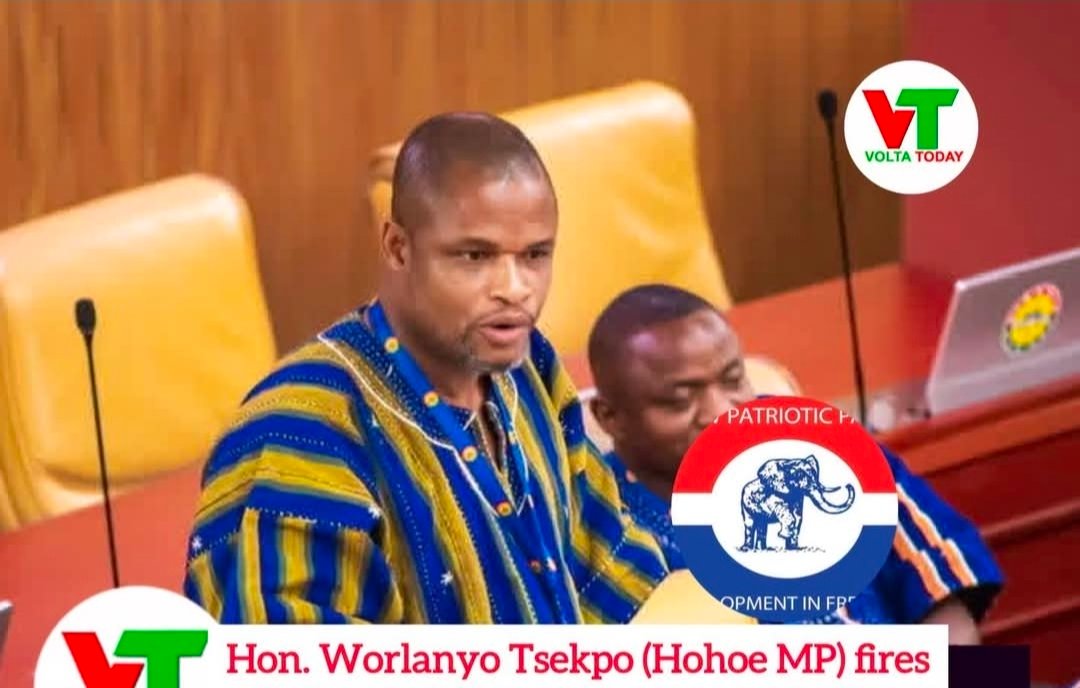
The Member of Parliament for Hohoe, Thomas Worlanyo Tsekpo, has criticized the New Patriotic Party (NPP) over its decision to introduce a fee for prospective parliamentary aspirants ahead of the 2028 general elections. Reacting to the opposition party's newly announced early eligibility requirements, the National Democratic Congress (NDC) legislator argued that the move places an unnecessary financial burden on party members. According to Hon. Tsekpo, the NPP is effectively "taxing the dreams of their members even in opposition with just the mere thought of becoming an MP."
The controversy stems from a directive issued by the NPP leadership requiring all prospective parliamentary candidates including sitting Members of Parliament to pay a fee when submitting a formal declaration of interest. According to party announcements, the process forms part of an early eligibility check ahead of the 2028 parliamentary primaries, with reports citing fees ranging from GH¢2,000 to GH¢5,000 for the initial declaration. The NPP General Secretary explained that the initiative is designed to promote a free, fair, and transparent selection process as the party reorganizes and prepares for the next general election.
Hon. Tsekpo's remarks highlight a broader political debate in Ghana regarding the rising cost of participating in internal party politics. Critics of high nomination and expression-of-interest fees argue that monetizing the initial stages of candidacy discourages capable, grassroots-oriented individuals from stepping forward to serve. By framing the fee as a tax on ambition, the Hohoe MP suggested that the opposition party is prioritizing revenue generation over inclusive internal democracy at a time when it is working to rebuild its base.
Conversely, defenders of internal party levies maintain that administrative fees are necessary to fund party operations, vet candidates, and ensure that only committed aspirants enter the race. In opposition, political parties often face heightened financial constraints without the indirect advantages of incumbency, making membership dues and filing fees critical sources of funding for nationwide reorganization exercises. From this perspective, the declaration of interest fee serves as both a logistical filter and a practical fundraising mechanism for the NPP's 2028 preparations.
As Ghana's major political parties lay the groundwork for the 2028 electoral cycle, exchanges like this underscore the ongoing scrutiny surrounding party financing and internal governance. While the NPP continues with its reorganization roadmap and early vetting timelines, sharp critiques from political opponents such as Hon. Worlanyo Tsekpo ensure that the accessibility and affordability of political leadership remain central topics in the national discourse.
@Volta Today

Comments
No comments yet. Be the first to share your thoughts!
Leave a Comment